
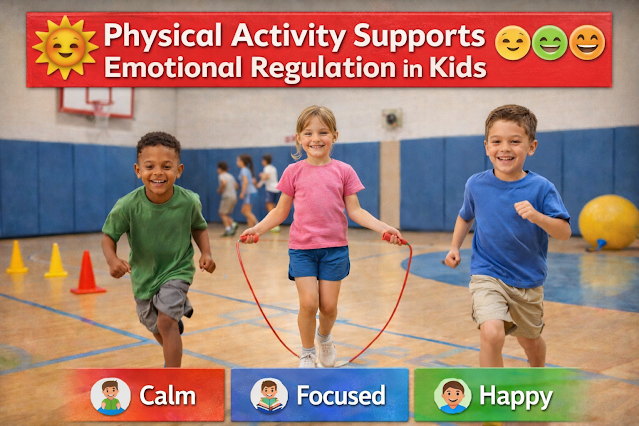
Learn how brain breaks and physical activity help kids regulate emotions, improve behavior, and boost classroom focus in schools.
How brain breaks, movement, and fitness improve mood, focus, and behavior
In today’s classrooms, students are expected to sit, focus, and learn for long periods of time. But kids aren’t built for stillness – they’re built to move.
We are also still seeing the lasting effects of the COVID-19 pandemic pause in schools. During that time, many students experienced reduced social interaction, limited physical activity, disrupted routines, and increased screen time. Those disruptions continue to show up today in the form of shorter attention spans, increased anxiety, difficulty managing emotions, and more classroom behavior challenges.
When students don’t get enough physical activity, emotions can build up and spill out as frustration, restlessness, or behavior problems. That’s why schools that prioritize movement and fitness see big improvements in emotional regulation, classroom focus, and behavior.
At Fitness Finders, we believe that movement is one of the most powerful tools for supporting student success.
What is Emotional Regulation?
- Manage frustration
- Handle disappointment
- Stay calm under stress
- Control Impulses
- Follow directions
- Work with peers
- Stay focused
- Recover from mistakes
Why Movement Improves Mood and Behavior
- Reduce stress
- Improve mood
- Increase focus
- Support memory
Brain Breaks Help Kids Reset
- Give students a chance to release energy
- Reduce anxiety
- Improve classroom behavior
- Increase attention
How Incentives Make Movement More Powerful
- Numbered medals to celebrate fitness achievements
- Star to celebrate academic success
- Books to spark excitement for young readers
Physical Activity Supports SEL
- Cooperation
- Self-control
- Goal-setting
- Emotional awareness
How Schools Can Use Movement to Improve Behavior
- Schedule daily movement breaks
- Run classroom fitness challenges
- Reward active participation with tokens
- Celebrate student progress
Why Movement Builds Better Learners
- Increases confidence
- Improves emotional control
- Reduces behavior problems
- Boosts academic engagement