
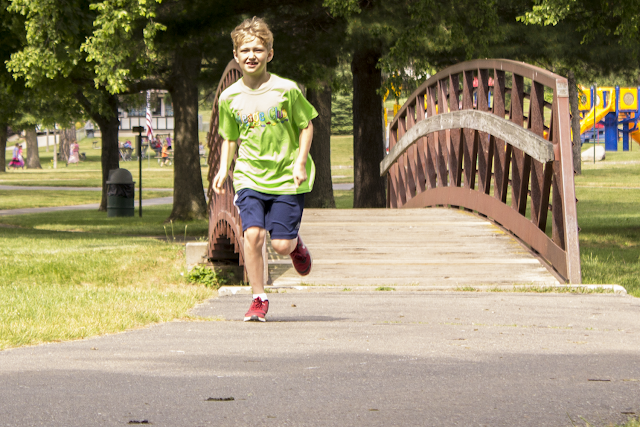
How Mileage Club Helped One Student Discover Confidence, Joy, and Belonging Through Running
season, when the school announced that Colin had logged nearly twice as many miles as the next-highest runner for the year, the entire student body erupted in cheers.
Running Became a Place Where Colin Could Shine
hasn’t always been an easy place for him. His mom, Carrie, shared that some of his classmates had seen him struggle and “have seen Colin at his worst.” This made coming in first place – and his peers celebrating him – even more meaningful.
- A physical release for extra energy
- A sense of independence
- A sense of pride
- A clear, repeatable structure
- A way to feel successful on his own terms
Why Running Works for Many Students with Autism
Within two years of road racing, Tommy Des Brisay was near the front of the pack. He was confused about where everyone else was the first time he won a race, so he went back up the course to run with each subsequent finisher and cheer for them as they crossed the line.”
“In running, social interaction is
common, but it’s not required for success. Running does not require mastery of
complex techniques, intricate rules, or the principles of teamwork—but it does
offer the opportunity to be a part of a team.”
Lang, Ph.D., the executive director of the Clinic
for Autism Research, Evaluation and Support at Texas State University in San
Marcos, said
that
“Running, in general, is
a community sport and lifetime activity that de-emphasizes social communication
and emphasizes repetitive behavior. That lends itself well to alignment with
the characteristics of autism.”
A Story That Reaches Far Beyond One Track
“What if it’s because of his autism that he’s this successful? You can choose to look at autism as a disability or as a collection of abilities to be celebrated.
There’s no doubt that for Tommy, part of his success as a runner has always been his unfailing willingness and joy in training. He’s the kind of guy who doesn’t see it as a tedium of any kind to go forward and do the same workout. There’s a comfort for him in that.
So I think for Tommy, his autistic tendencies are an advantage in a lot of things. One of those is his running.”
For Tommy, consistency, joy in routine, and deep focus became advantages, not obstacles.
Back to Colin – and Why Mileage Club Matters
When asked what he liked most about Mileage Club, Colin didn’t mention awards, tokens, or applause.
He simply said:
“Running.”
Mileage Club didn’t just help Colin improve his fitness. It helped him:
- Feel successful
- Build confidence
- Connect with his classmates
- Discover something he loves
This is what Mileage Club is all about.